What Does CDL Training Actually Cost in Tucson? A Straight Answer
The Reason Nobody Publishes One Number
Type “how much does CDL training cost in Tucson” into Google and you’ll get plenty of noise and almost no math. One school leads with “$500 down” and never says what the total is. Another buries pricing behind a lead form. A few don’t mention money at all until you’ve already sat through a tour. If you’re trying to figure out whether you can afford this, that silence is the problem, not a small annoyance on the way to enrolling.
We’re not going to throw out one flat number and pretend it covers every student, and we want to tell you exactly why before you assume we’re dodging the question.
CDL tuition isn’t one price. It’s a range based on a few variables: your program length, whether you already hold a license and just need an endorsement, and what extras your situation requires. A student going through the full 160-hour program pays something different than someone who already has a CDL and just needs a HazMat endorsement, or someone coming back for a CDL Refresher course. Posting one flat number on a website and pretending it applies to everyone means either lowballing it to get you in the door or padding it so nobody’s surprised. Both of those are worse than telling you what a program actually costs, and what changes that cost.
What Actually Changes Your Total
Here’s the numbers: the 160-hour program at the Tucson campus is $4,700 flat, covering tuition, registration, and the drug screen. That price is the same whether a student is finishing on the Class A or Class B track, since both run through the same 160-hour curriculum: 80 hours of classroom instruction and 80 hours behind the wheel.
What isn’t included in that $4,700 is where things change. A DOT physical, a Commercial Learner’s Permit, and any retests are billed separately. Students can also add HazMat or Passenger endorsement training while they’re at SWTDT, but each one is its own course with its own background check and testing costs, and those costs are mandatory and can’t be waived once a student signs up for that endorsement. A CDL Refresher course, built for someone who already holds a license and needs to sharpen specific skills, is priced separately from the full 160-hour program since it’s shorter and more targeted.
None of that is unique to SWTDT. It’s how CDL pricing works everywhere. The difference is whether a school tells you that up front or lets you find out during enrollment.
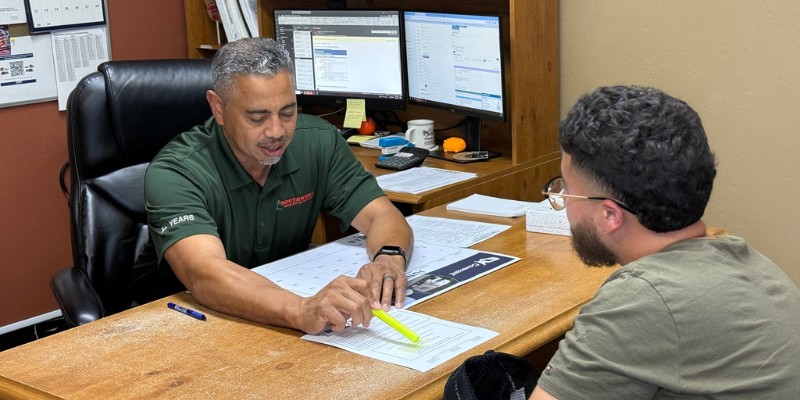
The honest move, and the one our admissions team actually follows, is to walk through your specific situation (which license, which schedule, whether you need an endorsement) and give you a total before you sign anything. Not a teaser. Not a range designed to sound impressive. A number tied to the program you’re actually enrolling in. If you want that number today, call the Tucson campus at (833) 464-0768 and ask. You don’t need to have your financing figured out first.
How People Actually Pay for CDL Training in Tucson
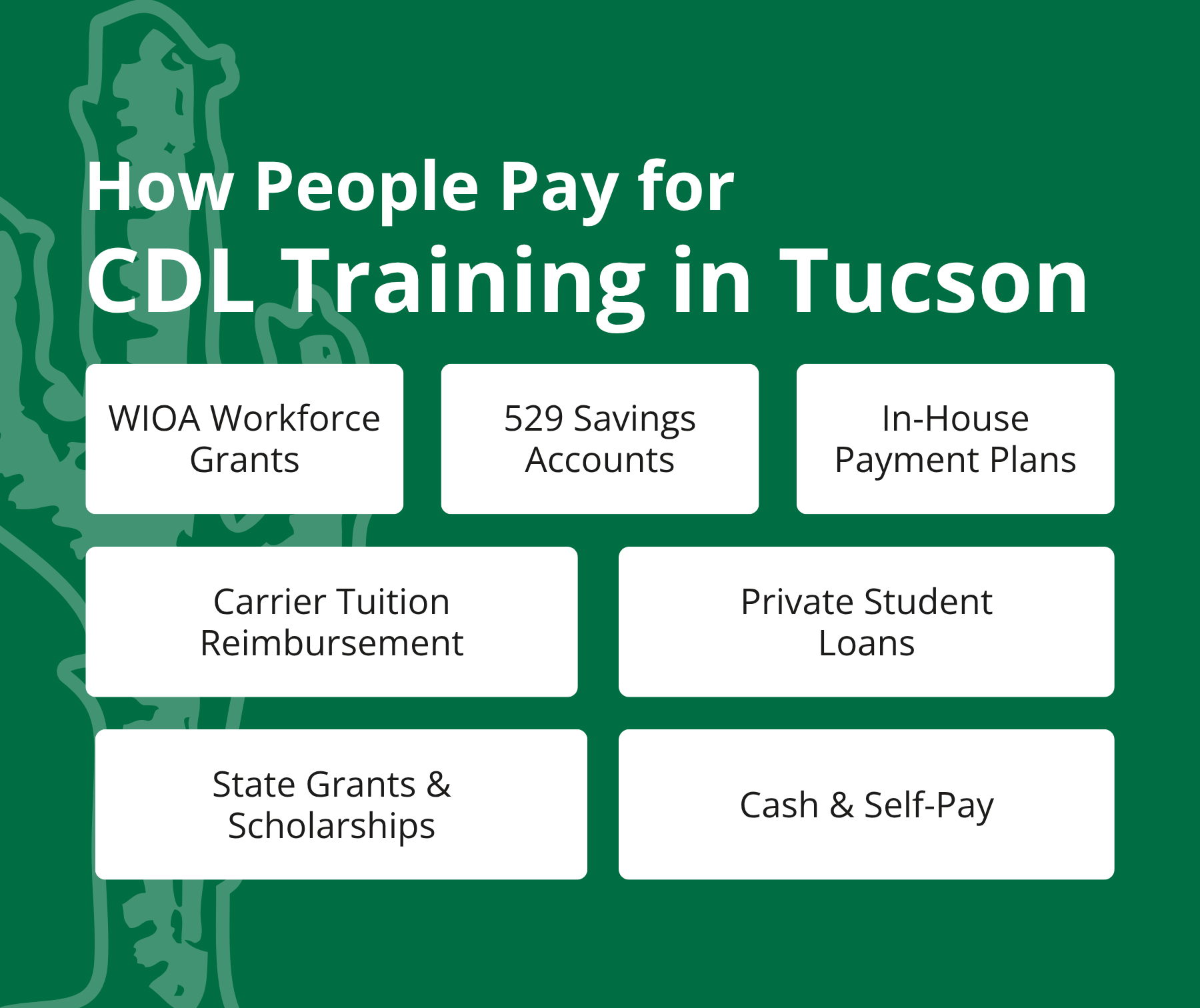
There’s more than one way to cover the cost, and most students end up combining a couple of these. Here’s the short version:
- WIOA workforce grants. A federal program, administered through Arizona’s workforce boards, that can cover a significant part of tuition for qualifying students. SWTDT is an approved WIOA provider at both campuses.
- 529 savings accounts. As of 2025, 529 funds can now be used for workforce training programs like CDL school, not just degree programs. Worth a call to the plan administrator to confirm.
- In-house payment plans. SWTDT offers its own payment plans for students who’d rather not pay all at once. Terms are set one-on-one during admissions.
- Cash and self-pay. Straightforward, with a full cost breakdown available before you commit to anything.
- Carrier tuition reimbursement. Some trucking companies cover part or all of training in exchange for a commitment to drive for them after graduation. SWTDT isn’t affiliated with any single carrier, so you choose whose terms work best for you.
- Private student loans. Third-party financing for costs outside the options above. Rates and terms vary by lender.
- State grants and scholarships. Availability shifts by funding cycle. Admissions can point you to what’s currently open to Arizona residents.
You don’t need financing lined up before you call. Figuring out which of these fits your situation is what admissions is for.
Why Tucson Specifically
Tucson sits right on the I-10 freight corridor, the same route that carries goods between Southern California and Texas, and the region moves cross-border freight tied to trade through Arizona’s ports of entry with Mexico. That’s ongoing demand for licensed drivers in Pima County, not just a national statistic that has nothing to do with where you live.
Training costs money, and knowing there’s strong demand for licensed drivers here matters as much as the price tag. For the full picture on job placement, carrier partnerships, and what graduates actually earn, see Careers After Training at SWTDT.
The Tucson Campus, in Practical Terms
The Tucson campus is located at 1230 W. Glenn St., just off I-10 at Miracle Mile Road, and it serves students from across Pima County and Southern Arizona. Day, evening, and weekend schedules are all available, so this doesn’t have to mean quitting your current job before your first paycheck as a driver.
Talk to Admissions Before You Decide Anything
If you’re weighing this decision right now, the honest next step isn’t researching more schools’ websites. It’s a phone call. Call the Tucson campus, tell them what program you’re considering, and ask for numbers, both the cost and the payment options that fit your situation.
Ready to take the first step? Talk to our team today.