
How Much Do Truck Drivers Make in 2026?
People hear “truck driver salary” and picture something in the $40,000 range. That picture is outdated, and it’s costing drivers real money.
The national median for heavy and tractor-trailer truck drivers is $57,440, according to the Bureau of Labor Statistics’ most recent data. [1] But the ATA’s 2024 Driver Compensation Study, which surveyed over 120 fleets and 150,000 drivers, puts the median for truckload drivers at $76,420. [2] The difference comes down to what you haul, where you work, and how your pay is structured.
There are drivers earning $40,000 a year. There are drivers clearing six figures. What separates them isn’t luck or seniority. It’s a handful of decisions most new drivers never think through.
This article walks you through those decisions.
What the Numbers Actually Tell You
The BLS median of $57,440 is the midpoint; half of all truck drivers earn more, half earn less. The ATA figure of $76,420 tells a different story: what experienced truckload drivers at reporting carriers actually earn. Both numbers are right. They’re measuring different things.
Here’s how the range plays out in practice:
- New drivers: Around $40,000 to start [1]
- After one year with a clean record: The $55,000–$70,000 range opens up
- Truckload median (ATA survey, 150,000+ drivers): $76,420 [2]
- LTL linehaul drivers: Median of $94,525 [2]
- Experienced drivers in specialized freight: $75,000–$100,000+ is common
The $57,440 BLS median is not a ceiling. It’s what the middle of the pack earns before they’ve made any deliberate moves.
One more thing worth knowing: most drivers work 60 to 70 hours a week, not 40. That compresses the effective hourly rate. At the same time, per diem payments, safety bonuses, and benefits packages regularly add $10,000 to $25,000 on top of base pay, so the driver who looks like they’re earning $57,000 on paper is often taking home significantly more.
The Five Factors That Move Your Pay (The M.I.L.E.S. Framework)
Two drivers with the same CDL can earn $30,000 apart. That gap doesn’t happen by accident.
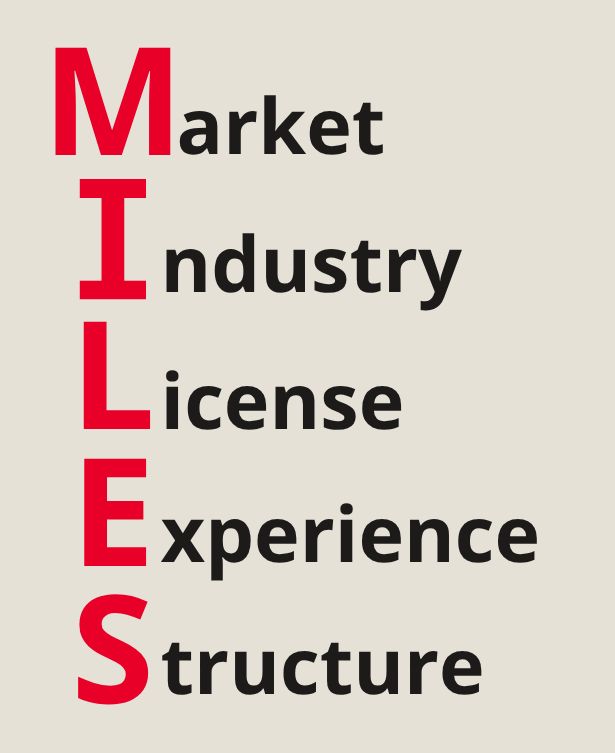
Five factors explain most of it, and they’re organized under what the industry calls the M.I.L.E.S. framework: Market, Industry, License, Experience, and Structure.
One thing to know upfront: the M doesn’t stand for logging more miles. Chasing mileage is one of the most common ways drivers leave money on the table. The framework is about combining the right freight, the right credentials, and the right pay structure.
M — Where You Work
Where you’re based sets your earnings floor.
The highest-paying states for heavy truck drivers, per BLS data: [1]
| Rank | State | BLS Median Annual Wage |
| 1 | Alaska | $65,430 |
| 2 | North Dakota | $62,260 |
| 3 | Oregon | $61,920 |
| 4 | New Jersey | $61,770 |
| 5 | New York | $61,600 |
| 6 | Connecticut | $60,640 |
| 7 | Iowa | $60,590 |
| 8 | Indiana | $60,370 |
| 9 | Illinois | $60,290 |
| 10 | Washington | $60,290 |
The lowest-paying states include Louisiana ($48,770), Florida ($51,020), and New Mexico ($52,240). [1]
But a high salary on a job listing doesn’t automatically mean more money in your pocket. Alaska has higher living costs. New York and New Jersey are expensive. A driver earning $55,000 in a low-cost state can come out ahead of someone earning $62,000 in a high-cost metro. Run the actual numbers on what it costs to live where you’d be working, not just what the job pays.
I — What You Haul
This is where a lot of drivers leave the most money behind.
Specialized freight pays more than standard dry van:
| Freight Type | Typical Pay Premium vs. Dry Van |
| HazMat | +35% to 50% |
| Tanker | +20% to 30% |
| Refrigerated (reefer) | +10% to 20% |
| Dry Van | Baseline |
A driver who moves from dry van to HazMat can add tens of thousands of dollars a year to their income without changing employers or putting in more hours. Same license. Same experience. More money, because of what’s in the trailer.
L — Your Endorsements
A HazMat endorsement costs $100 to $200 to obtain. It unlocks freight categories that pay 35% to 50% more than dry van. Stacking endorsements like HazMat, tanker, doubles/triples compounds that return. You don’t need a new employer or a career change. You need a test and a small fee.
At Southwest Truck Driver Training, we offer HazMat, Passenger, and School Bus endorsement programs at both our Phoenix and Tucson campuses. Students who add endorsements to their base CDL don’t have to wait years to see a real pay bump. The credential does the work.
E — Your Experience and Safety Record
New drivers start around $40,000. A year in, with clean miles and no incidents, the mid-$50,000s to $70,000 range opens up. Five years in, with the right freight specialty, $75,000 to $100,000+ is where a lot of drivers land, consistent with the ATA’s $76,420 truckload median. [2]
Experience matters. But it matters most when it’s paired with the other four factors. Drivers who wait for time alone to raise their pay get slower results than those who combine experience with credentials and freight specialization.
S — How Your Pay Is Structured
Two jobs at the same cents-per-mile rate can pay very differently once you factor in everything else. Per diem payments, performance bonuses, and a solid benefits package can add $10,000 to $25,000 above base pay. Drivers who evaluate offers on CPM alone are working with incomplete information. Always ask about the full compensation picture before you sign anything.
What Drivers Earn by State
The figures below are BLS OEWS May 2024 medians for heavy and tractor-trailer truck drivers (SOC 53-3032), published March 2025. [1] These are government-sourced medians, not carrier recruiting ranges or aggregator estimates.
Top 10 highest-paying states:
| State | BLS Median Annual Wage |
| Alaska | $65,430 |
| North Dakota | $62,260 |
| Oregon | $61,920 |
| New Jersey | $61,770 |
| New York | $61,600 |
| Connecticut | $60,640 |
| Iowa | $60,590 |
| Indiana | $60,370 |
| Illinois | $60,290 |
| Washington | $60,290 |
10 lowest-paying states:
| State | BLS Median Annual Wage |
| Louisiana | $48,770 |
| Florida | $51,020 |
| Arkansas | $52,120 |
| Oklahoma | $52,140 |
| New Mexico | $52,240 |
| South Carolina | $52,710 |
| Alabama | $53,370 |
| Arizona | $52,970 |
| West Virginia | $54,150 |
| North Carolina | $54,150 |
The spread between the highest- and lowest-paying states is about $16,660, smaller than most people expect. Most of the real earnings variation comes from freight type, endorsements, and pay structure, not geography alone.
Carrier-reported ranges on recruiting pages can run well above these state medians, because they typically reflect experienced drivers on high-performing routes. Those numbers are real, but they’re promotional, not independent medians, and shouldn’t be used as a straight comparison to government data.
The Owner-Operator Path
If you’re willing to run your own operation, the ceiling goes away, but so does the predictability.
Owner-operators gross $200,000 to $350,000 per year on average. But after fuel, insurance, maintenance, truck payments, permits, and taxes, the average net income for owner-operators tracked by ATBS, a firm that manages financials for thousands of owner-operators, was $64,524 in 2024-25. Top-performing owner-operators averaged $87,614 net, and the top third averaged $156,000 net annually. [3]
Those numbers belong to experienced operators who have locked in good lanes and manage their costs carefully. First-year owner-operators typically net 30% to 50% below those averages while building their business. [3]
Becoming an owner-operator means running a small business, not just driving a truck. The upside is real. So is the risk. Go in with clear numbers, not just the gross revenue figure from a recruiting page.
What CDL Training Actually Costs — and How Fast You Get It Back
The payback period on CDL training is short. Entry-level drivers starting at $40,000 typically recover their tuition within months of starting work, not years. A four-year degree can take a decade to pay off in earnings premium. A CDL often pays itself back in under a year.
The return gets better when you treat your Class A CDL as the starting point, not the finish line. A HazMat endorsement for $100 to $200 that unlocks a 35% to 50% freight premium is the kind of credential that changes your trajectory fast. Drivers who stack endorsements deliberately reach the $75,000+ tier faster than those who wait for seniority alone.
At Southwest Truck Driver Training, we’ve been putting CDL drivers on the road since 1999. We run Class A, Class B, and endorsement programs at our Phoenix and Tucson campuses, with on-site CDL skills testing so you test on the same range where you trained. No separate trip to a state facility.
The Bottom Line
Three things are true about truck driver pay in 2026:
- State averages are starting points, not where you end up. The BLS spread between the highest- and lowest-paying states is about $16,660. Most of the real earnings gap comes from freight specialty, endorsements, and pay structure, not geography. [1]
- The number on the job listing isn’t the full story. Gross pay in a high-cost state, base CPM without per diem, promotional carrier ranges that don’t reflect medians, all of these can mislead you if you take them at face value. Look at total compensation and what you’ll actually keep.
- The drivers clearing $100,000+ didn’t just wait. The ATA’s median for experienced truckload drivers is $76,420. LTL linehaul drivers median $94,525. [2] The drivers at the top hauled specialized freight, stacked low-cost endorsements, and structured their pay to capture bonuses and per diem. Geography sets the floor. Everything else is up to you.
Ready to take the first step? Talk to our team today at swtdt.com.
Sources
[1] Bureau of Labor Statistics, Occupational Employment and Wage Statistics (OEWS), May 2024, SOC 53-3032 — Heavy and Tractor-Trailer Truck Drivers. Published March 2025. bls.gov/oes
[2] American Trucking Associations, 2024 Driver Compensation Study (covering 2023 pay data, 120+ fleets, 150,000+ drivers). trucking.org
[3] ATBS (American Trucking Business Services), 2024–2025 owner-operator net income data. Referenced via truckstop.com (June 2026) and atob.com (March 2026).